
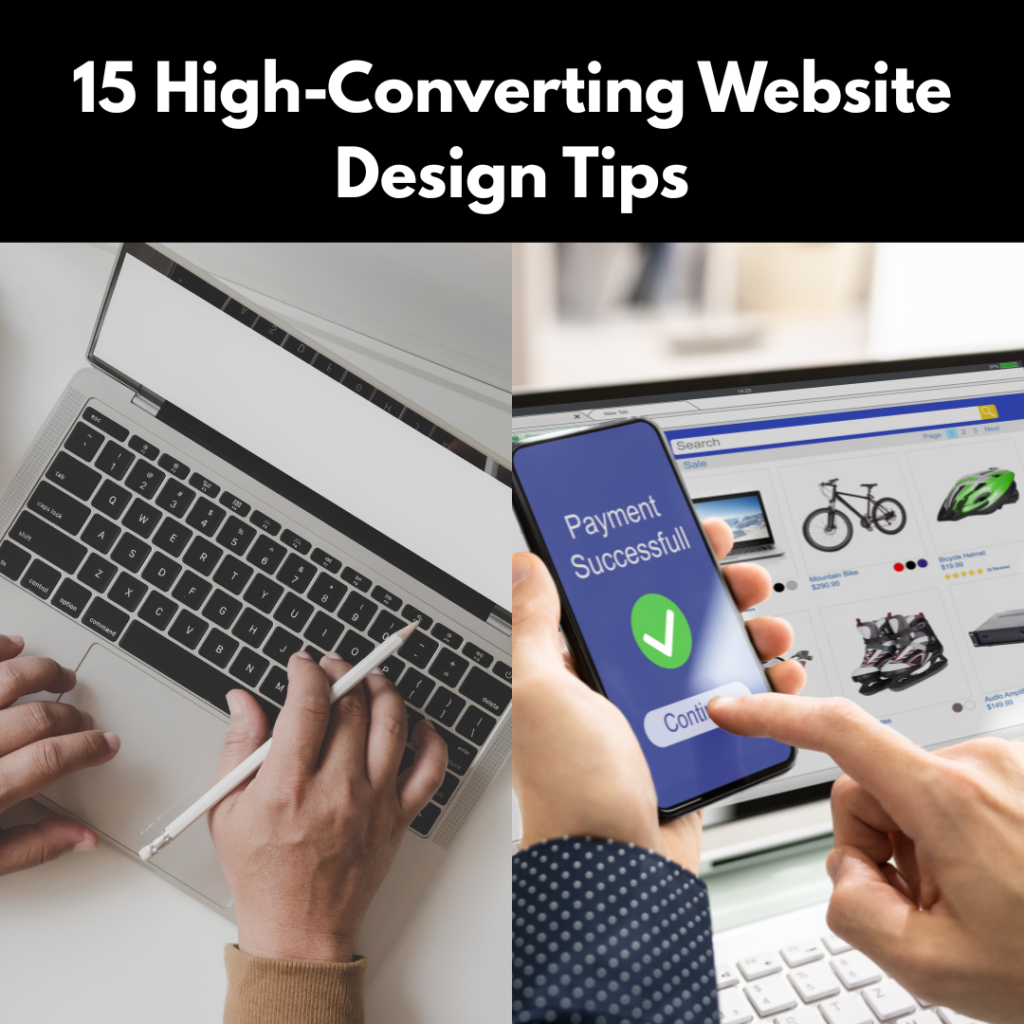
15 High-Converting Website Design Tips
High-Converting Website Design: 15 Proven Tips to Turn Visitors into Customers If your website gets traffic but not leads, something is wrong. And no! it’s not always your ads or SEO. In most cases, the real problem is simple: you don’t have a high converting website design. You can run powerful Google Ads. You can rank on page one. However, if your website is not built to convert, you are losing money every single day. The good news? This can be fixed. Read This- “Best Digital Marketing Services for Small Businesses” In this guide, you’ll learn what high converting website design really means, why it matters, and how to apply it step by step. Whether you run a startup, a service business, or an established company, these tips will help you build a website that actually generates results. What is High-Converting Website Design? Let’s keep it simple. High-converting website design means creating a website that pushes visitors to take action. That action could be: Filling out a contact form Booking a consultation Calling your business Downloading a brochure Making a purchase In other words, high converting website designs focuses on strategy, psychology, and user behavior, not just good looks. Yes, a beautiful website may impress visitors. But a high converting website makes them click, call, or buy. That’s the difference! Why High-Converting Website Design Is So Important? Your website is your digital salesperson. It works 24/7. It never sleeps. And it never takes a break. However, if it is not optimized with proper converting website design, it cannot do its job properly. Here’s why it matters: It increases lead generation It improves ROI from paid ads It builds trust It reduces bounce rate It improves user experience Most importantly, businesses that invest in high converting website design often grow faster, without increasing their marketing budget. Now let’s break down the exact elements that make a website convert. 1. Clear Value Proposition Above the Fold First impressions matter. When someone lands on your website, they should instantly understand: What you do Who you help Why you’re different If your headline is confusing, visitors will leave within seconds. A strong high converting website design always starts with clarity. Simple structure to follow: Clear headline Short supporting sentence Strong call-to-action button For example: “Generate 100+ Quality Leads Every Month with Our Proven Strategy.” Clear. Direct. Benefit-focused. That’s how high converting website design works. 2. Strong and Visible Call-to-Action (CTA) No CTA = No conversion. It’s that simple. Every high converting website design includes: Clear CTA buttons Contrasting colors Action-driven text Instead of writing “Submit,” write: “Get Free Consultation” “Start My Growth Plan” “Book My Strategy Call” Also, place CTAs smartly: At the top After service sections At the end of the page A strong high converting website guides users naturally toward action. 3. Simple and Clean Layout Complex designs confuse people. And confused people don’t take interest in your website. Hence, they leave your website & never get convert. That’s why simplicity is a core rule of high converting website design. Use: Plenty of white space Clear content sections Easy-to-read fonts Consistent colors When your website feels easy, users stay longer. And when they stay longer, conversions increase. 4. Mobile-First Design Today, most users browse on their smartphones because it is convenient. Therefore, mobile optimization is not optional. A proper high converting website design must be: Fully mobile responsive Fast loading speed Easy to scroll Thumb-friendly If your site looks great on desktop but messy on mobile, you will lose conversions quickly. Mobile experience directly impacts your website conversions. 5. Trust Signals and Social Proof People buy from businesses they trust. That’s why high-converting website design always includes proof. For example: Client testimonials Case studies Google reviews Certifications Real results If you run a digital marketing agency, show numbers like: “Generated 250+ Leads in 60 Days.” In brief, when users see proof, they feel safe. And when they feel safe, trust build up & they take action. 6. Fast Loading Speed Speed affects patience of the customers. If your website takes more than three seconds to load, many users will leave immediately. To improve the loading speed of yourwebsite design, focus on: Compressing images Using fast hosting Removing unnecessary plugins Enabling caching Hence, fast loading websites feel more professional. As a result, users are more likely to convert. 7. Clear Navigation Structure Navigation should be simple. If users cannot find what they’re looking for, they leave. A strong high-converting website design keeps navigation clean in the following way: Limited menu items Clear labels of pages (Home, Services, About, Contact) No unnecessary dropdown clutter In Short, the easier it is to explore your website, the higher your chances of conversion. 8. Optimized Landing Pages Landing pages are powerful. Unlike a homepage, a landing page focuses on one goal only. In high converting website designs, landing pages remove distractions and highlight benefits. They include: Strong headline Clear benefits Testimonials One main CTA In short, when landing pages are optimized properly, they can dramatically increase your conversion rate. 9. Persuasive Copywriting Design attracts attention. But words close the deal. A strong high converting website uses: Benefit-driven language Emotional triggers Clear problem-solving tone Simple explanations For example: Instead of: “We provide website services.” Say: “We design websites that generate leads and increase sales.” Hence, Small changes like this make a big impact. 10. Visual Hierarchy and Scannable Content Most visitors scan, not read the whole content. Therefore, your high converting website design should be easy to skim. Use: Headings and subheadings Short & crisp paragraphs Bullet points Bold key phrases Therefore, this will improve their readability and keeps users engaged for longer time. 11. Conversion-Focused Images and Videos Random stock images in the website reduce credibility and interest of customers. Instead put: Real time photos Behind-the-scenes visuals Client screenshots Product or Service Explainer videos Hence, visuals in your website should support your message — not distract from it. 12. Clear Contact Information Clearly show your contact details in the